
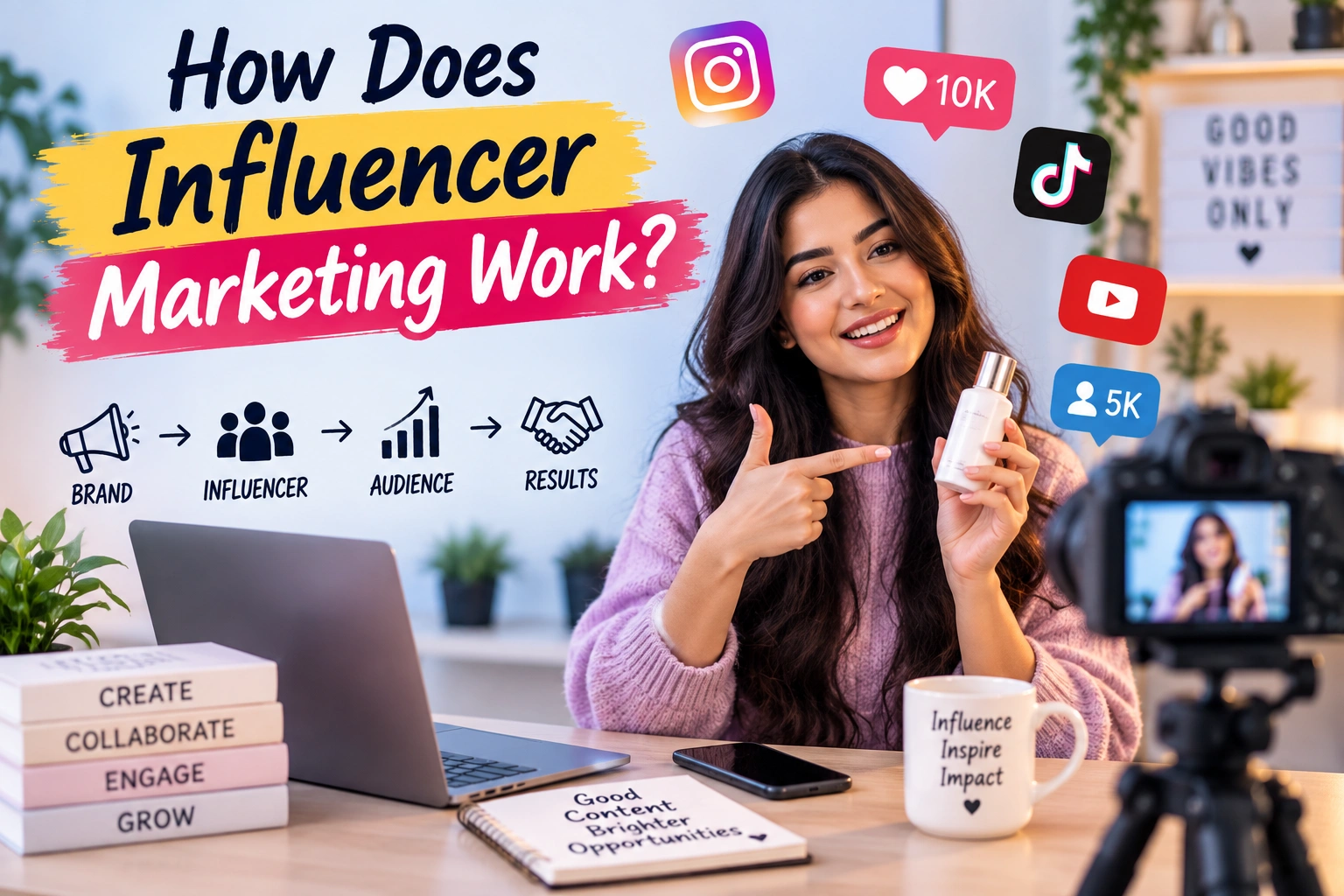
The way people discover products and services has changed significantly with the growth of social media. Traditional advertising is no longer the only way businesses reach potential customers. Many brands now work with influencers who have built engaged communities around specific interests, lifestyles, or areas of expertise.
Influencer marketing involves collaborating with these individuals to promote products, services, or ideas to their audiences. When planned properly, it can help businesses increase awareness, build trust, generate engagement, and encourage sales.
What Is Influencer Marketing?
Influencer marketing is a form of digital marketing in which a business partners with a person who has an established audience on social media or another online platform.
An influencer might create videos, photographs, reviews, tutorials, livestreams, blog posts, or other content featuring a brand. The goal is to introduce the product to an audience that already has an interest in the influencer’s content.
Influencers can operate in many industries, including fashion, beauty, travel, fitness, technology, food, entertainment, education, and business.
Choosing the Right Influencer
Successful influencer marketing starts with selecting the right person. A large follower count does not automatically mean an influencer is the best choice.
Businesses should consider whether the influencer’s audience matches their target customers. They may also examine engagement levels, content quality, audience demographics, communication style, and previous partnerships.
For example, a company selling specialized photography equipment may benefit more from working with a respected photography creator than with a general entertainment personality who has millions of followers.
Different Types of Influencers
Influencers are often grouped according to audience size.
Nano-influencers typically have small but highly focused communities. Micro-influencers have larger niche audiences and can often generate strong engagement. Macro-influencers reach significantly larger groups, while celebrity-level influencers can expose a campaign to massive audiences.
The right category depends on the campaign’s objectives, budget, and target audience.
A smaller creator may sometimes deliver better results than a much larger account because their followers may have a stronger personal connection with their recommendations.
How a Campaign Usually Works
A typical influencer campaign begins when a brand identifies a marketing goal. The objective could be increasing awareness, promoting a new product, driving website visits, generating leads, or encouraging purchases.
The business then identifies suitable influencers and discusses campaign requirements. Both sides may agree on the content format, publishing schedule, compensation, key messages, and disclosure requirements.
The influencer creates content based on the agreed campaign guidelines and publishes it to their audience.
Why Influencer Marketing Can Be Effective
Influencer marketing can work because audiences often feel connected to creators they regularly follow.
Unlike a conventional advertisement that appears directly from a company, influencer content may be presented through a creator’s usual storytelling style. This can make the promotion feel more relevant and easier for viewers to understand.
However, effectiveness depends heavily on authenticity. Audiences may respond negatively if a promotion appears forced or unrelated to the creator’s usual content.
The Importance of Authenticity
Trust is one of the most valuable elements of influencer marketing.
Creators should ideally promote products they genuinely understand and believe are appropriate for their audience. When a recommendation fits naturally into their content, viewers may be more receptive.
Brands should also avoid controlling every detail of the creator’s message. Providing clear campaign requirements is important, but allowing influencers some creative freedom can produce more natural content.
Measuring Campaign Performance
Influencer marketing should be measured like any other marketing activity.
Businesses can track metrics such as views, reach, likes, comments, shares, clicks, website traffic, leads, conversions, and sales.
Unique links, promotional codes, landing pages, and campaign tracking tools can help determine whether influencer content is producing measurable results.
A campaign that generates millions of views but very few relevant visitors may not be as successful as a smaller campaign that produces strong customer engagement and sales.
Paid Partnerships and Transparency
Influencer campaigns should be transparent when content involves a commercial relationship.
Creators may need to clearly disclose sponsored content or other material connections with brands according to applicable advertising rules and platform requirements.
Transparency helps audiences understand when they are viewing promotional content and can contribute to maintaining trust between creators and their communities.
Common Mistakes to Avoid
Businesses sometimes choose influencers solely because they have a high follower count. This can lead to poor audience alignment and disappointing results.
Another mistake is failing to define campaign objectives. Without a clear goal, it becomes difficult to determine whether the campaign succeeded.
Brands should also avoid ignoring an influencer’s previous content, reputation, audience quality, and communication style. A partnership should make sense for both the company and the creator.
The Future of Influencer Marketing
Influencer marketing continues to evolve as social media platforms change and audiences become more selective about the content they consume.
Short-form video, livestreaming, educational content, niche communities, and creator-led businesses are likely to remain important. Brands may increasingly focus on long-term relationships with creators rather than relying only on one-time promotional posts.
The distinction between traditional advertising and creator content may also continue to become less obvious as influencers participate in product development, brand storytelling, and community building.
Final Thoughts
Influencer marketing works by connecting brands with established online communities through trusted and recognizable creators. The strongest campaigns are not simply about reaching the largest possible audience. They focus on finding the right audience, choosing a suitable influencer, creating authentic content, and measuring meaningful results.
When brands and creators share compatible values and communicate clearly, influencer marketing can become a powerful way to introduce products and build lasting relationships with customers.