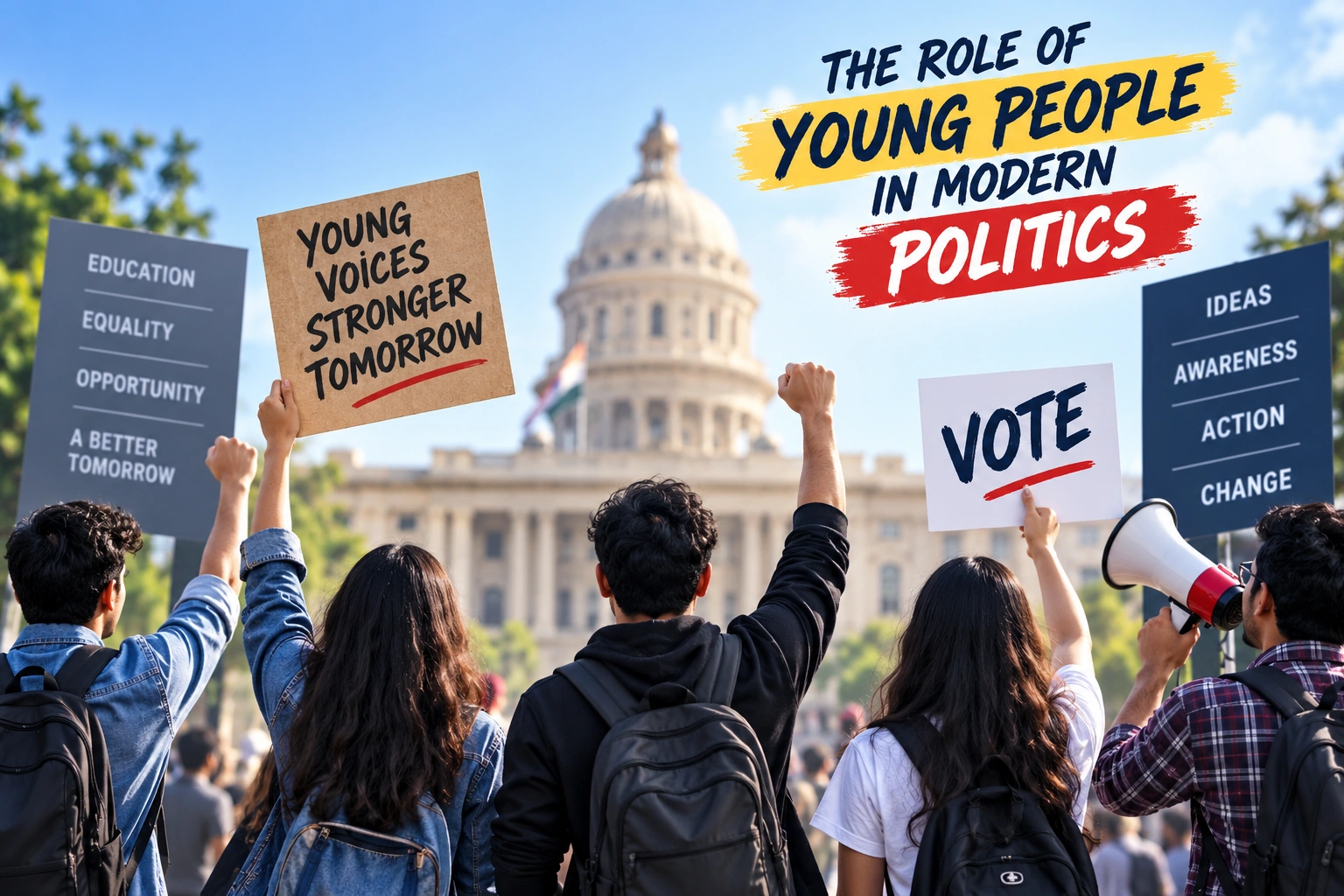
Young people have always played an important role in shaping society, but their influence on modern politics has become increasingly visible. With greater access to information, digital communication, education, and social platforms, younger generations can participate in political discussions in ways that were difficult for previous generations.
From voting and volunteering to community activism and online discussions, young people contribute to political life in many different ways. Their involvement can influence elections, public debates, government priorities, and the direction of future policies.
Young Voters Can Influence Elections
Voting is one of the most direct ways young people participate in politics. In many countries, younger citizens represent a significant part of the eligible voting population.
When large numbers of young voters participate, political parties and candidates may pay greater attention to issues that matter to them. These can include education, employment, housing, technology, environmental concerns, transportation, and economic opportunities.
However, simply being eligible to vote does not guarantee participation. Some young people may feel disconnected from political institutions or believe that their individual vote will not make a difference. Encouraging informed and active participation can therefore be important for a healthy democratic system.
Social Media Has Changed Political Engagement
Social media has created new ways for young people to engage with politics. Platforms allow users to share opinions, discuss current events, follow political figures, organize campaigns, and raise awareness about community issues.
A political message can reach thousands or even millions of people within a short period. Young users can also create videos, graphics, podcasts, and other forms of content that explain complicated issues in accessible ways.
At the same time, social media requires careful use. False information, misleading headlines, edited videos, and emotionally charged posts can spread quickly. Young people can strengthen political discussions by checking sources and comparing information before sharing it.
Young People Bring New Perspectives
Every generation experiences different social and economic conditions. Younger people may therefore bring perspectives that are not always represented strongly in political institutions.
They may have different views about technology, education, employment, digital privacy, climate concerns, social change, and the future of work.
Their experiences can help policymakers understand emerging challenges. When younger voices are included in political discussions, governments have more opportunities to consider the needs of people who will live with the long-term consequences of today’s decisions.
Political Participation Goes Beyond Voting
Political involvement is not limited to elections. Young people can participate by attending community meetings, joining civic organizations, volunteering, contacting elected representatives, supporting local initiatives, or taking part in peaceful demonstrations.
Students can also participate through campus organizations and educational discussions. These experiences can help them understand how public institutions operate and how community-level decisions are made.
Even small local efforts can have meaningful effects when people work together toward a shared objective.
Young Leaders Are Entering Politics
An increasing number of younger adults are becoming involved in formal political roles. Some run for local office, while others work in government, policy organizations, community groups, or political campaigns.
Young candidates can bring different professional experiences and communication styles to public life. Their presence can also encourage other young citizens to view political participation as something accessible rather than distant.
However, entering politics can involve significant challenges, including limited resources, public scrutiny, and the difficulty of balancing political responsibilities with personal and professional commitments.
Education Supports Informed Participation
Political awareness is stronger when people understand how government works. Civic education can help young people learn about elections, laws, public institutions, rights, responsibilities, and the decision-making process.
Understanding how policies are created also helps people evaluate political claims more effectively.
Rather than following political opinions simply because they are popular online, informed citizens can examine evidence, compare different viewpoints, and make decisions based on their own understanding of an issue.
Young People Can Influence Policy Priorities
Political parties and governments pay attention to public concerns when developing policies. If young citizens consistently communicate their priorities, those issues can become more prominent in political debates.
For example, large numbers of young people discussing employment opportunities may encourage greater attention to job creation and skill development. Strong interest in education can influence discussions about schools, universities, training, and affordability.
The impact depends on many factors, but sustained participation can help bring specific concerns into the public conversation.
Challenges Facing Young Political Participants
Young people can face several barriers to political participation. Lack of political knowledge, limited access to reliable information, distrust of institutions, financial limitations, and feelings of political frustration can discourage involvement.
Online arguments can also make political conversations feel hostile. Constructive discussion requires the ability to listen to opposing viewpoints without automatically treating disagreement as personal conflict.
Creating spaces where young people can ask questions and participate respectfully can make political engagement more meaningful.
The Future of Politics Depends on Youth Participation
Young people will eventually become the leaders, voters, professionals, entrepreneurs, and community members responsible for shaping society. Their political involvement today can influence the institutions they inherit tomorrow.
Whether through voting, volunteering, digital communication, community projects, or formal leadership, their participation can contribute to a more representative political environment.
Final Thoughts
The role of young people in modern politics extends far beyond casting a ballot. They influence conversations, introduce new perspectives, organize communities, use digital platforms, and increasingly participate in formal leadership.
Their involvement is most effective when it is informed, responsible, and focused on constructive participation. By understanding political systems and engaging thoughtfully with public issues, young people can play an important role in shaping the future of their communities and countries.