
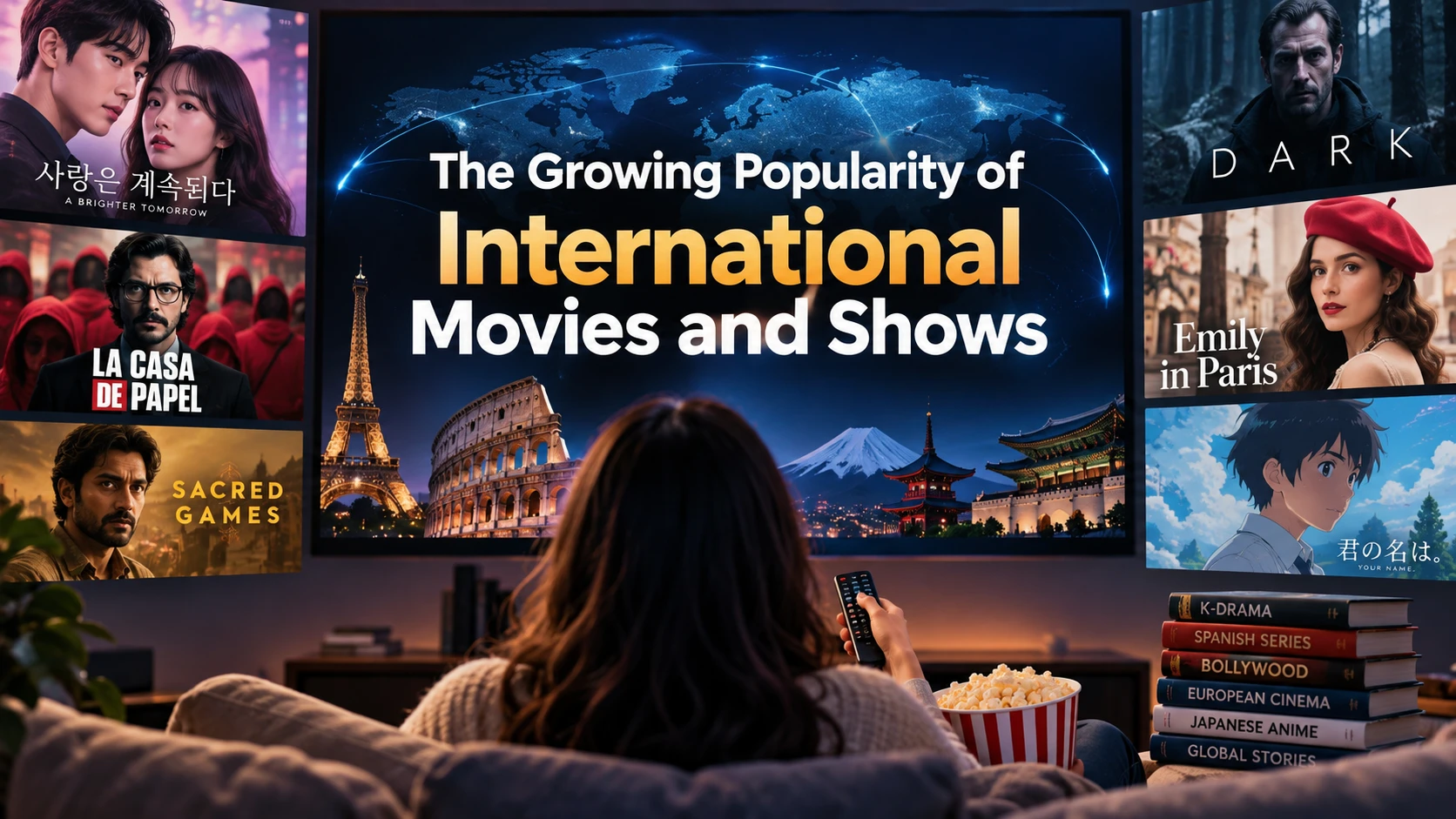
Entertainment has become more global than ever. Audiences are no longer limited to movies and television shows produced in their own countries. With streaming platforms, social media, subtitles, dubbing, and easier internet access, viewers can discover stories from almost every part of the world.
International movies and shows have moved from being niche choices to becoming mainstream entertainment. People are increasingly willing to watch productions in unfamiliar languages and explore cultures, storytelling styles, and characters that may be very different from their own experiences.
Streaming Platforms Have Changed Viewing Habits
One of the biggest reasons behind the growth of international entertainment is the expansion of streaming services. Viewers can now access content from different countries without waiting for television networks or cinemas to distribute it locally.
A person sitting at home can discover a Spanish thriller, a Korean drama, a Japanese animated series, or an Indian film within minutes. This accessibility has removed many of the geographical barriers that previously limited international entertainment.
Streaming platforms also recommend content based on viewing behavior. Someone who enjoys one foreign-language production may quickly receive suggestions for similar movies and shows from other countries.
Subtitles and Dubbing Make Content More Accessible
Language used to be one of the biggest obstacles to international entertainment. Today, subtitles and dubbing have made foreign-language content much easier to understand.
Subtitles allow viewers to hear the original performances while reading translations. Dubbing, meanwhile, replaces the original dialogue with another language, making content easier to follow for people who prefer not to read while watching.
Better translation quality has also improved the overall viewing experience. As international content becomes more accessible, audiences are increasingly comfortable watching stories in languages they do not speak.
Audiences Want Different Stories
Another reason international entertainment is gaining popularity is that viewers are looking for fresh storytelling.
Movies and shows produced in different countries often approach familiar themes in new ways. Romance, crime, family relationships, friendship, ambition, and personal struggles may be universal subjects, but each culture can present them through its own perspective.
This variety gives viewers alternatives to familiar formulas. A story does not have to come from their own country to feel meaningful or entertaining.
Social Media Helps International Content Go Viral
Social media has made it easier for international movies and shows to reach audiences outside their original markets.
Short clips, memorable scenes, interviews, fan edits, reviews, and discussions can spread rapidly across platforms. A viewer may discover a foreign-language series simply because a scene appeared repeatedly in their social media feed.
Online communities also create conversations around international productions. Fans discuss characters, theories, endings, costumes, music, and memorable moments, encouraging other people to watch the same content.
Cultural Curiosity Is Growing
International entertainment allows viewers to learn about different cultures without necessarily traveling.
Movies and shows can introduce audiences to local traditions, food, celebrations, family structures, fashion, architecture, music, and everyday lifestyles. Although fictional productions should not always be treated as completely accurate representations of a culture, they can encourage curiosity and further exploration.
For many viewers, entertainment becomes a gateway to discovering another country’s history and cultural identity.
International Stars Are Building Global Audiences
Actors, directors, musicians, and creators can now develop fan bases far beyond their home countries.
A successful international series can introduce an actor to millions of viewers worldwide. Fans may then follow their other projects, interviews, social media accounts, and future releases.
This global visibility is also creating more opportunities for collaborations between creators from different countries.
The Rise of Cross-Cultural Storytelling
International entertainment is not simply about one country producing content for another country’s audience. Increasingly, creators are working across borders.
Productions may involve actors, directors, writers, production companies, and creative teams from multiple countries. These collaborations can combine different filmmaking traditions and perspectives.
As global audiences grow, cross-cultural storytelling is likely to become an even more important part of the entertainment industry.
Challenges Still Remain
Despite its growth, international entertainment faces challenges. Translation can sometimes change the meaning or humor of dialogue. Cultural references may not be understood by every viewer, and some productions may have limited availability in certain regions.
There is also the risk of audiences forming inaccurate impressions about a country based entirely on fictional stories. Viewers should remember that movies and shows are creative works rather than complete representations of real life.
The Future of International Entertainment
The popularity of international movies and shows is likely to continue growing as technology makes global content easier to discover and consume.
Audiences are becoming more open-minded about language and cultural differences. At the same time, creators have more opportunities to reach viewers beyond their domestic markets.
The result is a more connected entertainment landscape where a compelling story can cross borders regardless of where it was created.
Final Thoughts
The growing popularity of international movies and shows reflects a major change in the way people consume entertainment. Streaming services, subtitles, dubbing, social media, and cultural curiosity have made global storytelling more accessible than ever.
For viewers, this means greater choice and the opportunity to experience different perspectives. For creators, it provides access to audiences around the world. As these connections continue to strengthen, international entertainment will likely become an increasingly important part of everyday viewing.